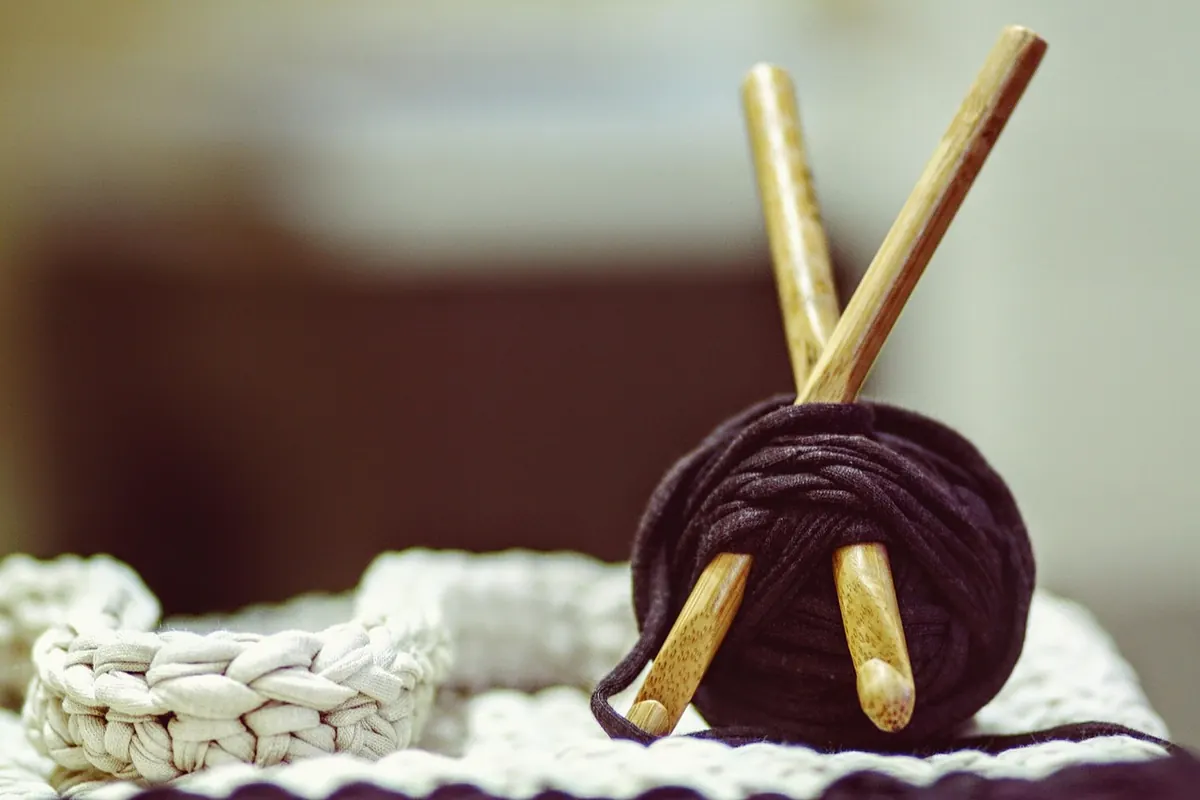
There is a particular pleasure in working with yarn while the windows are open and the fan is turning. Summer projects ask for different choices than the sweaters of October: thinner yarns, looser gauges, stitch patterns that let air through, and fabric that moves with you instead of sitting on your shoulders. Cotton and linen behave nothing like wool, and a pattern that looks simple in a photograph can turn stiff or heavy once it is worked in the wrong fibre.
The five designs below are built around breathable yarns — cotton, linen and fine blends — and they share a useful trait: they are forgiving to work in the heat, easy to put down mid-row, and made to be worn rather than admired on a shelf. Each one comes with notes on what to watch for, because with summer yarns the small decisions are where projects succeed or fall apart.
The most common summer knitting disappointment is not a difficult stitch pattern. It is a beautiful top that hangs like a curtain after two wears. That is almost always a fibre and gauge problem rather than a design problem, so start there.
Whichever you choose, make a swatch of at least fifteen centimetres square, wash it the way you plan to wash the finished piece, and lay it flat to dry. Then measure. A swatch that has not been washed is only half a swatch in plant fibres, and the gap between pre-wash and post-wash gauge is often the reason a finished top feels too big.
A summer garment should feel slightly too light and slightly too loose before blocking. It will meet you halfway.
This is the pattern to reach for when you want something finished by the weekend. Worked in a sport-weight cotton with a 3.5 mm to 4 mm hook, it is essentially a rectangle with shoulders: double crochet at the hem and neckline, chain-three mesh everywhere in between. The openwork does the cooling, and the solid bands keep the shape from collapsing.
Work the front and back as two flat panels to the armhole, then shape the neckline with simple decreases every other row. Join the shoulders with a slip stitch rather than a whipstitch — a crocheted seam has more give and sits flatter on the skin. If your tension tightens as the mesh rows go on, switch to a hook half a millimetre larger for the body and keep the smaller hook for the edging.
First, work a round of single crochet around each armhole before you wear it; raw crochet edges curl, and a firm edging fixes that permanently. Second, make the tee five to eight centimetres shorter than you think you want. Cotton mesh stretches in wear, and a top that sits at the hip bone on the blocking mat will be mid-thigh by August.
Linen stitch — the slipped-stitch pattern that produces a woven, tweedy surface — is a quiet hero for summer knits. It makes a dense-looking fabric that is surprisingly thin and does not cling, and it holds its shape better than stocking stitch in cotton. Worked in the round from the hem up in a cotton-linen blend, it needs no shaping beyond a gentle waist decrease and a scoop neck.
One thing to know before you begin: linen stitch pulls in widthwise. Most knitters need to go up one size, or add roughly ten percent to their stitch count, to end up with the measurements they expect. Swatch in the round if you can, because flat linen stitch and circular linen stitch are different fabrics, and the circular version is the one you will be wearing. Finish the armholes and neck with a few rounds of single ribbing on a needle two sizes smaller so the openings stay put.
A lace wrap in fine linen is the most portable project on this list. A two-ply linen on 4 mm needles, a repeating mesh of yarn-overs and decreases, and a border of garter stitch to keep the edges from rolling — that is the whole pattern. It weighs almost nothing, fits in a small project bag, and works as a scarf on the beach and as a layer over a dress in the evening.
Lace is where blocking stops being optional. Wet the finished wrap, roll it in a towel, then pin it out on mats with blocking wires along the long edges and pull the points firmly. Linen holds the openness you set while it dries. Run a lifeline every ten rows or so if you are working without a chart memorised; a dropped yarn-over in fine linen is genuinely hard to rescue.
Crochet bags are the ideal use for the sturdy cotton string sold on cones. Take a 4 mm to 4.5 mm hook, start with a flat oval base in single crochet, then switch to a chain-four mesh for the sides. The base takes the weight, the mesh takes the volume, and the whole thing folds into a pocket when you are not using it.
Two practical notes. Keep the base tension firm, or a bag of tomatoes will turn it into a hammock, and work the handles as a chain before reinforcing them with a round of single crochet, because a plain chain handle stretches thin under load. Use a smaller hook for the top band and the handles than for the mesh. Everything here is washable, so make two while the hook is out.
Summer socks sound like a contradiction until you spend an afternoon in an air-conditioned office. Choose a cotton sock yarn with a small amount of nylon for durability — pure cotton wears through at the heel quickly — and work at a
Photo: 742787 / Pixabay
A beginner-friendly, step-by-step guide to sewing a lined tote bag, from choosing fabric and cutting panels to...
A practical pre-start guide to crochet gauge, hook sizing, and yarn preparation, with a checklist to help you avoid...
A practical guide to buying wool across Italy: the wool districts worth visiting, the fairs worth planning around,...

Patient threads for handmade textile crafts.
